
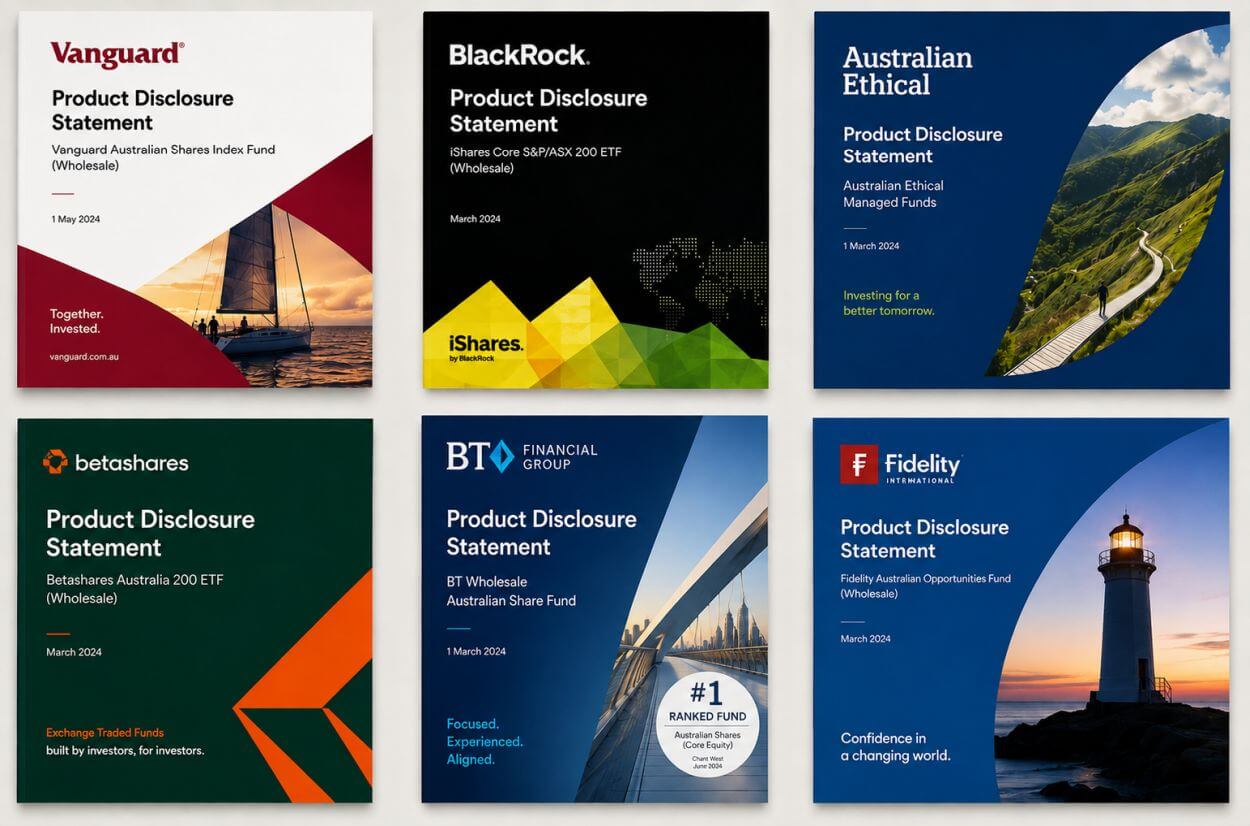
An Investment Asset Guide – Managed Funds
This investment asset guide to managed funds is provided to clarify some of the mystery that sometimes shrouds investment portfolios. Managed funds are a popular way for Australians to invest in shares, property, fixed interest and other assets without selecting and managing each investment themselves.
Your money is pooled with that of other investors and managed according to the fund’s investment strategy. A managed fund can therefore provide access to professional investment management and diversification through a single investment.
You may already have exposure to managed funds through your superannuation. You can also invest in managed funds directly, often through an investment platform.
But managed funds vary considerably. Their risks, fees, liquidity and potential returns depend on what they invest in, the strategy they apply – and how they are managed.
What is a managed fund?
A managed fund pools money from many investors to buy a portfolio of investments.
The fund manager makes investment decisions within the fund’s stated strategy. You do not normally own the underlying shares, bonds or other assets directly. Instead, you own units or another interest in the fund.
The value of your investment rises and falls with the value of the underlying assets. Some funds also pay distributions from income and realised capital gains.
In Australia, many managed funds operate under legislation that categorises them as managed investment schemes. The company responsible for operating a registered scheme is generally known as the responsible entity.
What types of managed funds are available?
There are thousands of managed funds available to Australian investors. They differ according to both what they invest in and how they manage those investments.
Share funds
Australian and international share funds invest mainly in listed companies. They generally aim for long-term capital growth, although share prices can fluctuate significantly.
Fixed interest funds
These funds invest in government and corporate bonds and other debt securities. They may provide income and diversification, although interest rate and credit risks can affect returns.
Property funds
Property funds can invest directly in commercial, industrial or retail property, or in property-related securities.
Unlisted property funds can have limited liquidity, so investors should understand when and how they can withdraw their money.
Cash and income funds
These funds invest in cash and short-term securities or assets designed to produce income. They generally have lower growth potential than share funds, but risk levels vary between funds.
Diversified funds
Diversified or multi-asset funds invest across several asset classes, such as shares, property, bonds and cash.
They can provide diversification through one investment and may be designed around different risk profiles, such as conservative, balanced or growth.
Specialist and alternative funds
Some funds focus on areas such as infrastructure, private credit, commodities, private equity or hedge fund strategies.
These investments can broaden diversification but may involve greater complexity, higher fees, leverage or reduced liquidity.
Active versus passive managed funds
Managed funds can also differ in how investment decisions are made.
Active funds employ investment managers to research investments and decide what to buy, hold or sell. Some aim to outperform a particular market index.
Passive or index funds generally aim to replicate the performance of a particular market index. They usually require less active decision-making and often have lower fees.
Neither approach is automatically better. The important consideration is whether the strategy suits your objectives, risk tolerance and investment timeframe.
What are the benefits of managed funds?
Managed funds can provide several advantages.
Professional management
A fund manager makes investment decisions on your behalf. This can be valuable if you do not have the time, expertise or desire to research individual investments.
Diversification
A fund may hold many different investments. This can reduce your reliance on any one company, security or market.
Diversification can also occur across asset classes, countries and investment managers.
Access to investment markets
Managed funds can provide access to international markets and specialist investments that may be difficult or expensive to access directly.
Convenience
One investment can give you exposure to a broad portfolio. This can simplify the construction and management of a diversified investment portfolio.
What are the risks of managed funds?
Managed funds are investments, not bank deposits. Their value can fall, and you may receive less than you invested.
The main risks include:
Market risk: The value of the underlying investments can fall.
Manager risk: An active manager may make investment decisions that result in poor performance.
Concentration risk: A fund focused on a particular company, sector, country or asset class may suffer larger losses when that area performs poorly.
Interest rate and credit risk: These can affect funds investing in bonds, loans and other fixed-interest investments.
Currency risk: International investments can be affected by changes in exchange rates.
Liquidity risk: Some funds may restrict, delay or suspend withdrawals, particularly when their underlying investments are difficult to sell.
Gearing risk: A fund that borrows to invest can magnify both gains and losses.
The risks vary between funds. You should therefore look beyond the fund’s name and understand what it actually invests in.
What does a managed fund cost?
Managed funds charge fees and incur costs for managing and operating the investment.
These can include:
- management fees and costs;
- administration and operating expenses;
- transaction costs;
- performance fees; and
- establishment, contribution or withdrawal fees in some cases.
Even relatively small differences in fees can have a significant effect on long-term returns because they reduce the amount available to remain invested and compound.
The fund’s Product Disclosure Statement (PDS) explains its fees and costs.
A higher fee does not automatically mean a fund is unsuitable. The important question is whether the investment strategy and potential benefits justify the additional cost.
What about tax?
Managed funds can generate different types of taxable income, including interest, dividends and capital gains.
Depending on the fund’s structure, investors may receive distributions and tax information showing the amounts that need to be included in their tax returns.
Managed investment trusts can also be subject to specific tax rules.
Tax treatment can become more complicated where a fund invests internationally, in property or through more complex structures. Your personal tax position should therefore be considered before investing.
What should you look for when choosing a managed fund?
Before investing, consider:
Investment objective: What is the fund trying to achieve?
Underlying investments: What does the fund actually own?
Risk: How much could the investment fall, and can you tolerate that level of volatility?
Investment timeframe: How long should you remain invested?
Liquidity: How quickly can you access your money?
Fees: What will the investment cost each year and when you buy or sell?
Performance: How has the fund performed over appropriate periods compared with its benchmark and similar funds?
Diversification: Does the fund complement your existing investments or simply duplicate them?
Past performance can provide useful information about how a fund has performed, but it is not a reliable indicator of future returns.
Are managed funds right for you?
Managed funds can be an effective building block for a diversified investment portfolio.
They provide professional management, diversification and access to a wide range of investment markets. They can also simplify investing for people who do not want to select individual investments themselves.
However, “managed fund” describes a structure, not a particular level of risk.
A cash fund, international share fund and private credit fund can all be managed funds, yet their potential returns, risks and liquidity can be very different.
The right choice depends on your financial goals, investment timeframe, risk tolerance and existing portfolio.
The bottom line
Managed funds can make investing simpler, but choosing the right fund requires more than looking at past performance.
It is important to understand what a fund invests in, the risks involved, how it is managed, what it costs and how it fits alongside your other investments. A fund that is appropriate for one investor may not be appropriate for another, even where their investment goals appear similar.
At Continuum Financial Planners, we can help you determine whether managed funds are appropriate for your circumstances and, importantly, how they fit within your broader investment strategy.
We consider your financial goals, investment timeframe, tolerance for risk, existing investments and overall financial position when recommending an investment strategy. We can also review an existing portfolio to identify whether your investments remain appropriate and aligned with your objectives.
If you would like to discuss your investment portfolio, review your existing managed funds or explore your investment options, contact the team at Continuum Financial Planners to arrange a discussion. To arrange a meeting with one of our advice team members –
- phone our office on 07-3421 3456; or
- at your convenience, use the linked Book A Meeting
This article has been prepared with reference to information published by ASIC and Moneysmart.
(This article was originally posted by us in August 2026.)